
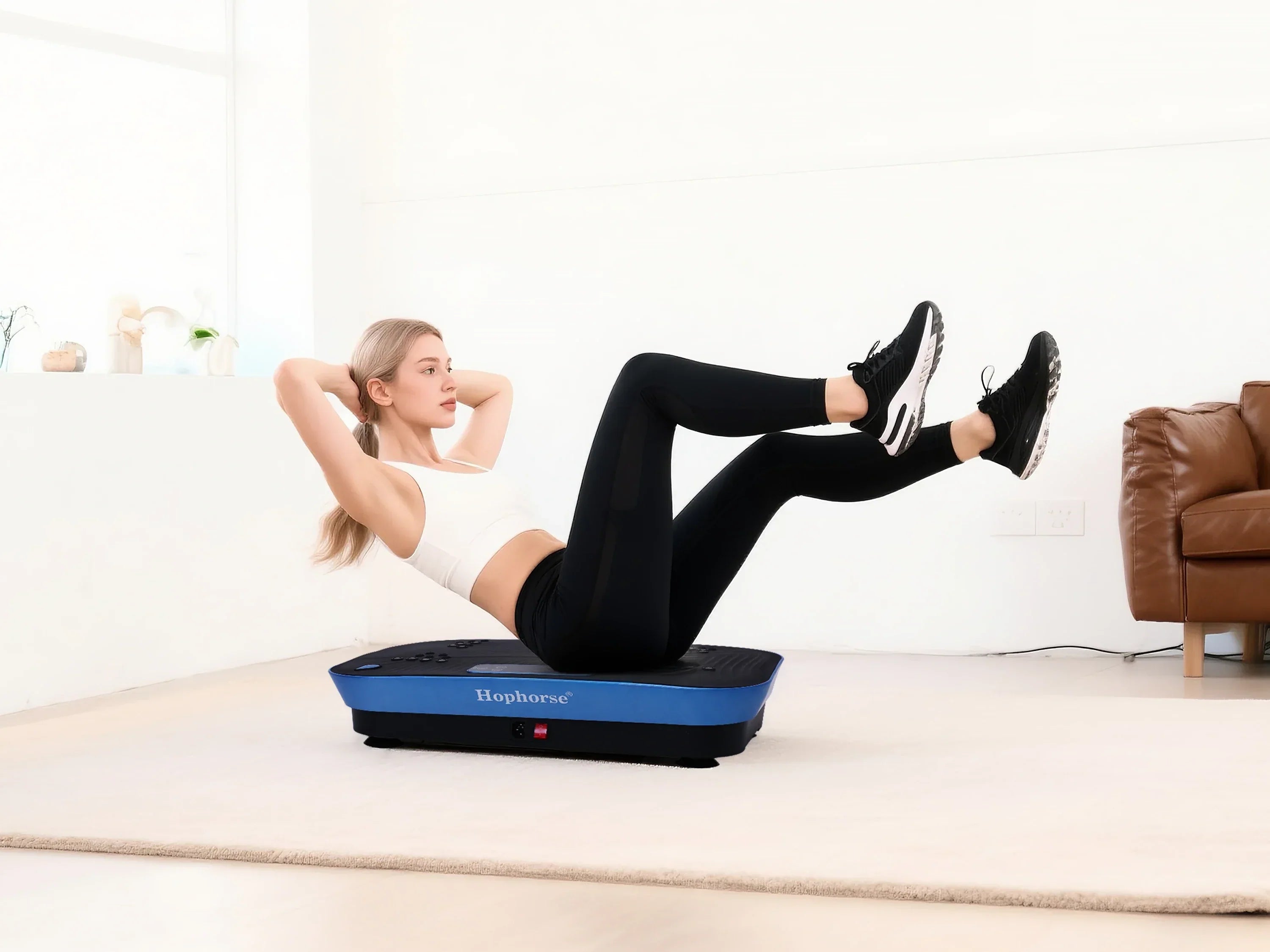
Vibration plates are everywhere lately — in gyms, social media, and even in people’s living rooms. But the central question remains: do vibration plates really work? The short answer is: yes — under the right conditions and with realistic expectations. Below, I’ll walk you through what the research says, what might actually work, and what to watch out for.
What Are Vibration Plates — and How Do They Work
A vibration plate (also called a whole-body vibration) is a platform that oscillates or vibrates, transmitting mechanical energy through your body when you stand, sit, or perform exercises on it. These vibrations cause rapid, involuntary muscle contractions, which can enhance muscle activation compared with some conventional, static exercises.
Because of this increased muscle stimulation—and the fact that these devices require minimal equipment or weight—they’ve become popular as a quick, low-impact alternative or supplement to traditional workouts.
What the Science Says: Where Vibration Plates Show Promise
Based on current research and expert reviews, here are the main areas where vibration plates seem to deliver real benefits:
Improved Muscle Activation, Strength & Function
Several studies show that WBV can enhance muscle contraction, especially in lower body and core muscles. This can lead to better strength and functional performance — particularly helpful for older adults, people with limited mobility, or those returning from injury.
Better Bone Health & Bone Density (Especially for Certain Populations)
Because vibration transmits mechanical stress to bones similarly to weight-bearing exercise, WBV may help stimulate bone-building activity, potentially benefiting bone density. This is promising especially for populations at risk of bone loss or osteoporosis.
Enhanced Circulation, Flexibility, and Mobility
Vibration training appears to improve blood flow, help with muscle recovery, reduce stiffness, and support joint mobility. These effects make WBV useful not only for workouts but also for warm-ups, cool-downs, or recovery days.
Low-Impact Alternative for Those Who Can’t Do High-Impact Exercises
Because vibration plates provide exercise stimulus without heavy loading or jumping, they are gentler on joints and suitable for people who have joint sensitivity, are older, or are recovering from injury.
What Vibration Plates Can’t (or Probably Won’t) Do — The Limitations
But let’s be realistic: vibration plates are not miracles. Here’s what the science and experts caution against.
They’re Not a Magic Weight-Loss Tool
Although some studies report modest fat or weight loss when vibration training is combined with reduced calorie intake or other exercise, the effect is generally small. WBV alone rarely leads to significant fat loss or changes in body composition.
Mixed Results on Muscle Growth and Strength Gains
While strength and function appear to improve, the evidence on building large muscle mass or dramatic strength gains is mixed — especially compared to traditional resistance training.
Not Suitable for Everyone — Health Risks & Cautions Exist
Because vibrations stimulate bones and muscles rapidly, people with certain conditions should avoid or use caution. This includes those with recent fractures, serious joint or spinal issues, cardiovascular problems, implanted devices (like pacemakers), or those pregnant.
Also, overuse or improper use (too high frequency, too long duration) can lead to discomfort, dizziness, or even joint or nerve stress.
How to Use a Vibration Plate Smartly (If You Try One)
If you decide to give WBV a shot, here are some practical tips to maximize benefits and minimize risk:
- Use it as a supplement, not a replacement. Combine vibration sessions with regular strength training, cardio, and healthy nutrition.
- Keep sessions short and controlled — many benefits show up with 10–20 minute sessions, 2–4 times per week.
- Use proper posture and form — even though the platform vibrates for you, your body still needs to stabilize and engage properly.
- Avoid high settings initially — start with low-to-moderate vibration frequency, especially if you’re new or have joint concerns.
- Check with your doctor if you have health conditions (joint issues, circulatory problems, implants, pregnancy, etc.).
Final Verdict: So, Do Vibration Plates Work?
Yes — but with caveats.
Vibration plates can be a useful, low-impact, convenient supplemental tool for improving muscle activation, aiding circulation, supporting bone health, and enhancing recovery. They’re especially helpful for people looking for joint-friendly exercise, those with limited mobility, or anyone seeking added benefits on top of a regular routine.
But they are not a substitute for consistent aerobic exercise, strength training, and healthy nutrition — especially if your goal is significant fat loss or major muscle building.
If you go in with realistic expectations, understand their strengths and limitations, and use them properly, vibration plates absolutely can work — and work well.
If you’re curious about trying vibration training for yourself, choosing a machine that’s stable, easy to use, and built for everyday home workouts makes a big difference. That’s why many users look for models with solid construction, adjustable intensity, and beginner-friendly design—features you’ll find in the vibration plates at Hophorse. If you’re ready to explore what whole-body vibration can do for your routine, you can check out our latest options at Hophorse-fit.com.
Share:
Vibration Plate Benefits: How This Compact Machine Can Transform Your Home Workouts
How to Use Vibration Plate: Smart Exercises & Tips